
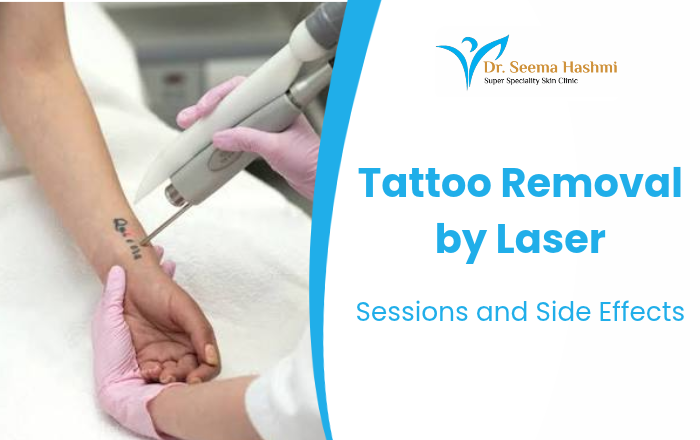
A tattoo that once felt right can feel different years later. Some people want a design faded to make way for a cover-up, while others want it gone altogether. Tattoo removal by laser is the method most commonly used today, but it is a gradual medical procedure and the results vary from person to person.
This guide explains how the laser works, what affects the number of sessions, the side effects you should know about, and how to prepare. A dermatologist needs to examine your skin and your tattoo before giving you a plan.
How Does Laser Tattoo Removal Work?
A tattoo is made of ink particles that sit in the deeper layer of the skin (the dermis). The laser sends very short pulses of light energy that are absorbed by the ink. This breaks the ink into much smaller fragments, which the body’s immune system slowly clears over the following weeks.
Different lasers and wavelengths are used for different ink colours. Because the ink clears slowly, treatment is carried out in several sessions, with a gap between them so that the skin can heal.
How Many Sessions Will You Need?
There is no fixed number of sessions that applies to everyone. Your dermatologist will give you an idea after seeing the tattoo, but this is an estimate, and it can change as the tattoo responds. These factors usually matter:
- Ink colour: black and dark blue ink usually respond more readily, while green, yellow, light blue and other bright colours can be slower to fade.
- Size and density: a large, heavily inked tattoo generally needs more work than a small, light one.
- Depth of the ink: professional tattoos often have deeper and denser ink than amateur ones, but this differs in each case.
- Age of the tattoo: older tattoos may have faded partly on their own.
- Location: areas with better blood circulation may clear differently from areas such as the hands and feet.
- Your skin tone and healing: these affect the settings used and the gap between sessions.
- Layers of ink: cover-up tattoos and previous touch-ups add more ink to treat.
Sessions are usually spaced several weeks apart, as advised by your doctor. Rushing them does not speed up results and can raise the chance of side effects.
Will the Tattoo Disappear Completely?
Not always. Many tattoos fade a great deal, and some fade to a faint mark or a shadow. Some inks or colours may stay partly visible, and the skin may look slightly different from the surrounding skin. A realistic expectation is important, and a good consultation includes a clear discussion about what may and may not be possible in your case.
Side Effects of Laser Tattoo Removal
Laser tattoo removal is a medical procedure, and like any procedure it can cause side effects. Most are temporary, but some can last.
Common and Short-Term Effects
- A snapping or stinging feeling during treatment, often compared to a rubber band flick
- Redness, swelling and tenderness for a few days
- A whitening of the skin right after treatment, which settles soon after
- Pinpoint bleeding, blisters or scabs in the treated area
- Itching as the skin heals
Less Common Effects
- Pigment changes: the skin can become darker (hyperpigmentation) or lighter (hypopigmentation), more so with sun exposure. These changes may fade slowly, and in some people they remain.
- Infection: open blisters or broken skin can get infected if they are picked at or not kept clean.
- Scarring or textural changes: uncommon, but more likely if the skin is picked, burned by the sun or poorly cared for.
- Allergic reaction: rarely, some people react to the tattoo ink as it breaks down.
- Darkening of certain inks: some cosmetic and flesh-toned inks may turn darker after laser treatment, so a small test area may be advised.
Tell your dermatologist about any history of keloids, herpes on the area, skin conditions or allergies before the first session.
Who May Not Be Suitable for Treatment?
The doctor may delay or avoid treatment in situations such as:
- A fresh tattoo that has not completely healed
- Active skin infection or an open wound in the area
- Recent sun tanning or a tan on the area
- Pregnancy or breastfeeding, as advised by the doctor
- Use of certain medicines that make the skin sensitive to light
- A tendency to form thick scars or keloids
How to Prepare for a Session
- Avoid sun exposure and tanning on the area before treatment.
- Keep the skin clean, and do not apply creams or oils before you arrive unless told to.
- Inform your doctor of every medicine and skin product you use.
- Wear clothing that allows easy access to the tattoo.
- Ask questions about the plan, the likely discomfort and the aftercare.
Aftercare Tips
- Keep the area clean and dry, and apply any ointment your doctor prescribes.
- Do not pick scabs or burst blisters.
- Protect the area from the sun with clothing and a sunscreen of the strength your doctor advises.
- Avoid swimming pools, saunas and heavy sweating until the skin has healed.
- Contact the clinic if you notice increasing pain, pus, spreading redness or fever.
Other Options to Consider
Where full removal is not possible, some people choose to fade the tattoo and then cover it with a new design. If you are considering this, tell your tattoo artist that the area has been treated with a laser. Surgical removal is another method, but it leaves a scar, and it is not common for larger tattoos.
Frequently Asked Questions
1. Is laser tattoo removal painful?
Most people feel a snapping or burning sensation. The level of discomfort differs from person to person and depends on the area treated. Your doctor can tell you what options may help.
2. How long should I wait between sessions?
Usually several weeks, so that the skin can heal and the body can clear the ink. Your dermatologist will set the gap.
3. Can any tattoo be removed?
Many can be faded, but the response depends on the ink, depth and skin. A consultation will tell you what is realistic.
4. Will it leave a scar?
Scarring is not common when the procedure is done properly and the aftercare is followed, but it is possible.
5. Can I go out in the sun after a session?
Sun protection is important. Direct sun on treated skin can raise the chance of pigment changes.
Consult a Dermatologist for Tattoo Removal in NIBM Annexe, Pune
To know whether your tattoo can be treated and what to expect, you can book a consultation with Dr. Seema Hashmi (MBBS, DDV), who has 12+ years of clinical experience as a dermatologist and cosmetologist. You can read more about tattoo removal, learn about laser treatment on sensitive skin or use the contact page.
Name: Dr. Seema Hashmi Super Speciality Skin Clinic
Led by: Dr. Seema Hashmi, MBBS, DDV, Dermatologist and Cosmetologist
Address: Off No 111, AMC Avenue, NIBM Annexe, opp. RAHEJA VISTAS PHASE-3, Autadwadi Handewadi, Mohammed Wadi, Pune, Maharashtra 411060
Phone: 96651 48163
This article is for general information and does not replace a medical consultation.